Frohring Meadows Habitat
Frohring Meadows features a woodland dominated by red and sugar maples; beech, black cherry, tulip, red oak, ash and hickory trees also grow here. Vernal pools host a variety of life including several species of amphibians, like the Spotted Salamander, which return each spring to lay their eggs.
A low-lying, wet sedge meadow habitat serves as an important feeding stop for migrating shorebirds such as plovers and sandpipers. Aquatic invertebrates living in the shallow water provide ample food for hungry migrants. The water-holding capacity of this area is beneficial to many species of dragonflies and damselflies as well. The Band-winged Dragonlet dragonfly, a new species to Geauga County typically native to Texas, was discovered here in 2007.
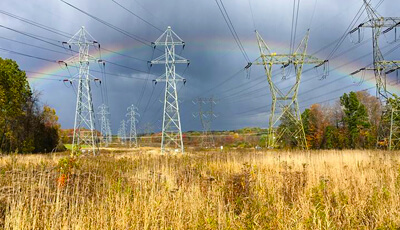
The abandoned farm fields have become an ideal setting for a special habitat creation project featuring a tall grass prairie, a habitat that might have been found in parts of Ohio when early settlers roamed the territory.
The prairie includes warm season grass species such as big bluestem, little bluestem, Indian grass and switch grass. There are a number of flowering plants associated with this habitat, such as purple coneflower, blazing star, New England aster and mountain mint.
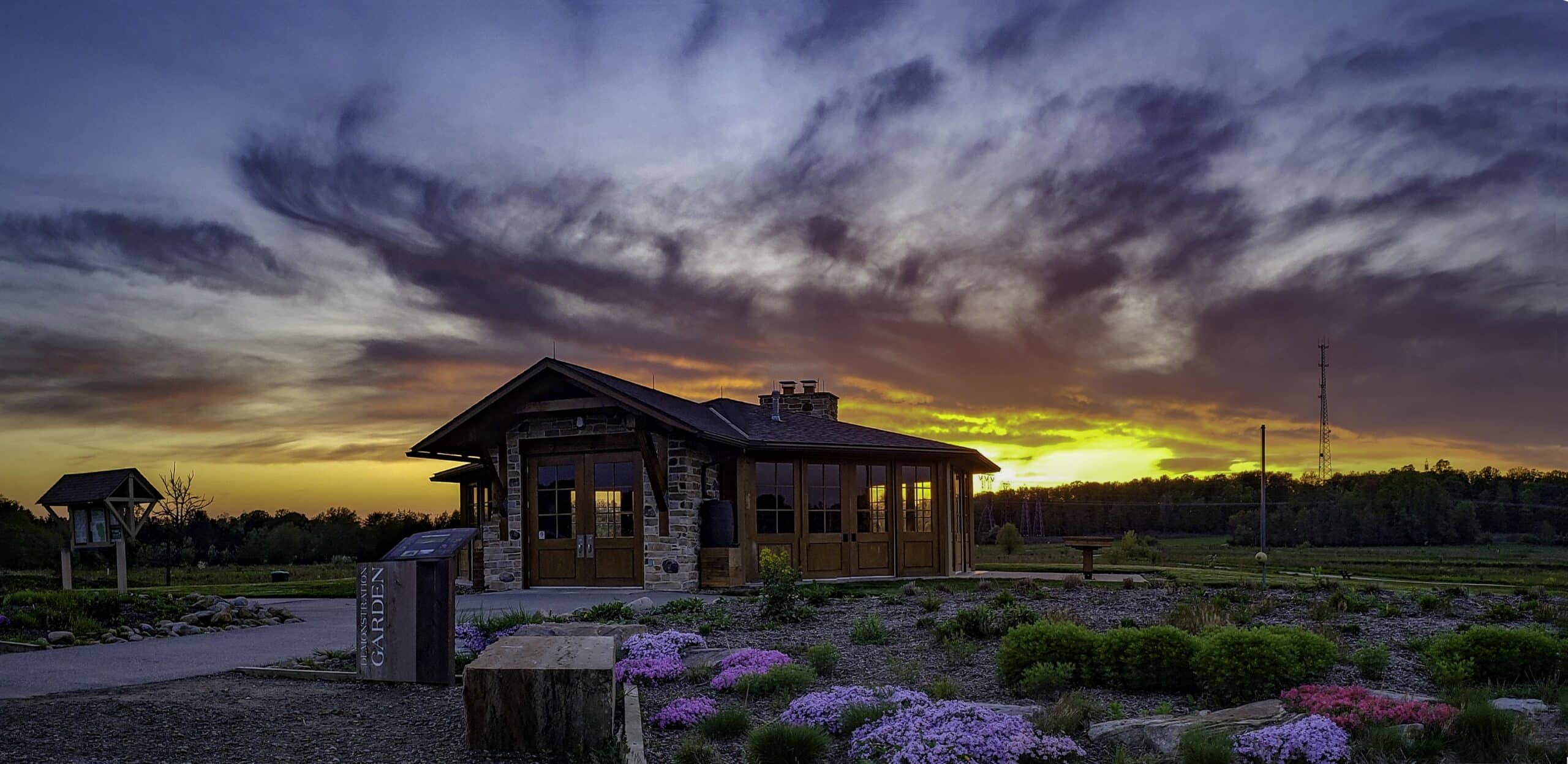
A beautiful prairie butterfly garden also features all 40 plant species found in the surrounding prairie – a great reference for what a stroll around the park may reveal.

 (440) 286-9516